


The Trial
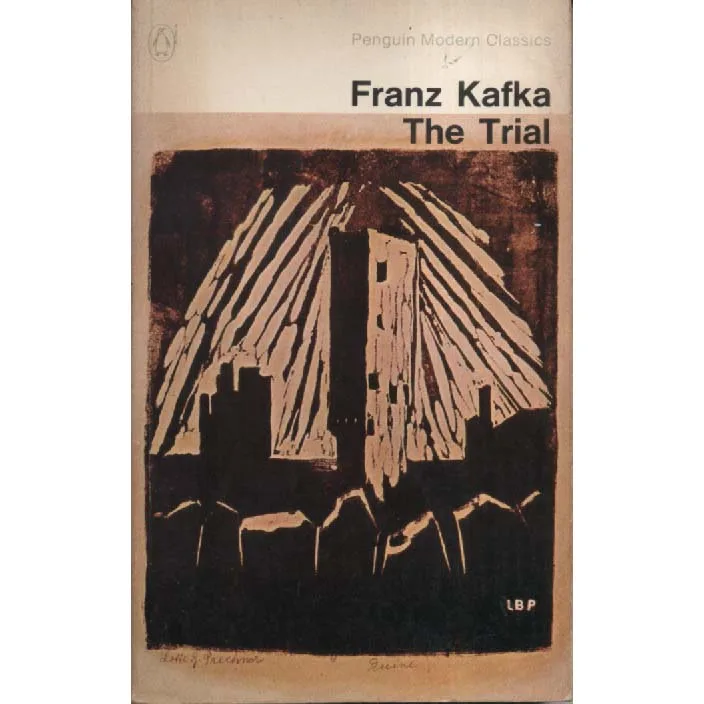
Publisher: Penguin Modern Classics
Format: Paperback
ISBN: none
There are novels that tell you what is happening, and then there are novels that begin with something happening and spend the rest of the time refusing to explain it. The Trial (1966), by Franz Kafka and presented here in a Penguin Modern Classics edition, belongs very firmly in the second category: a book that opens with an arrest and proceeds to demonstrate that an arrest is only the beginning of the confusion.
The premise is disarmingly simple. A man wakes up to find himself under arrest. No one will tell him why. From that point on, the narrative unfolds with a kind of steady, dreamlike logic in which procedures exist, rules are implied, and authority is everywhere, but clarity remains just out of reach. It is less a story about crime and punishment than about the unsettling realisation that systems may function perfectly well without ever needing to justify themselves to the people caught inside them.
Kafka’s style is precise, almost calm, which makes the situation all the more disconcerting. Offices appear where they should not, conversations drift into ambiguity, and the protagonist continues, with admirable persistence, to seek an explanation that never quite arrives. It is not dramatic in the conventional sense. There are no sudden revelations, no neat resolutions, and very little in the way of reassurance. Instead, there is a gradual accumulation of unease, delivered with the quiet confidence of a writer who seems entirely aware of what he is doing, even if the reader is not.
This Penguin Modern Classics edition from 1966 carries the familiar understated design of the series: practical, slightly austere, and entirely unconcerned with drawing attention to itself. This particular copy is listed as Good, which in Crappy Old Books terms suggests it has been opened, handled, and perhaps read with a mixture of curiosity and mild apprehension. The cover may show some wear, the spine may have softened, and the pages may bear the faint traces of previous readers who may or may not have felt entirely comfortable with what they found.
It is not a novel one rushes through, though it is often shorter than it feels. More likely, it will be read in stages, paused over, and occasionally revisited, as though one might discover, on a second attempt, what exactly was going on the first time. Whether you approach it as a classic of modern literature, an exploration of bureaucracy, or simply a book you feel you ought to have encountered by now, it delivers an experience that is difficult to summarise and rather easier to remember.
A quietly unsettling work that manages to be both controlled and disorienting, and a perfectly respectable way to suggest that your reading habits extend into territory where explanations are not always provided, and where the absence of them may, in fact, be the point.
Keep browsing: See more Modern Classics books Other books by Franz Kafka
